The Classifier Age: Where AI Is Taking the World, and How to Stand Firm in It
The age of classification
By Aynstyn · · 8 min read
We are living through one of those rare stretches of history where the ground moves under everyone's feet at the same time. Artificial intelligence is being described as a miracle, a threat, a bubble and a revolution, sometimes in the same news cycle. To navigate it, we first need to strip away the noise and understand what this technology actually is, who is shaping it, what it is doing to the economy, and what it asks of us as individuals.
What AI Really Is: The Best Classifier We Have Ever Built
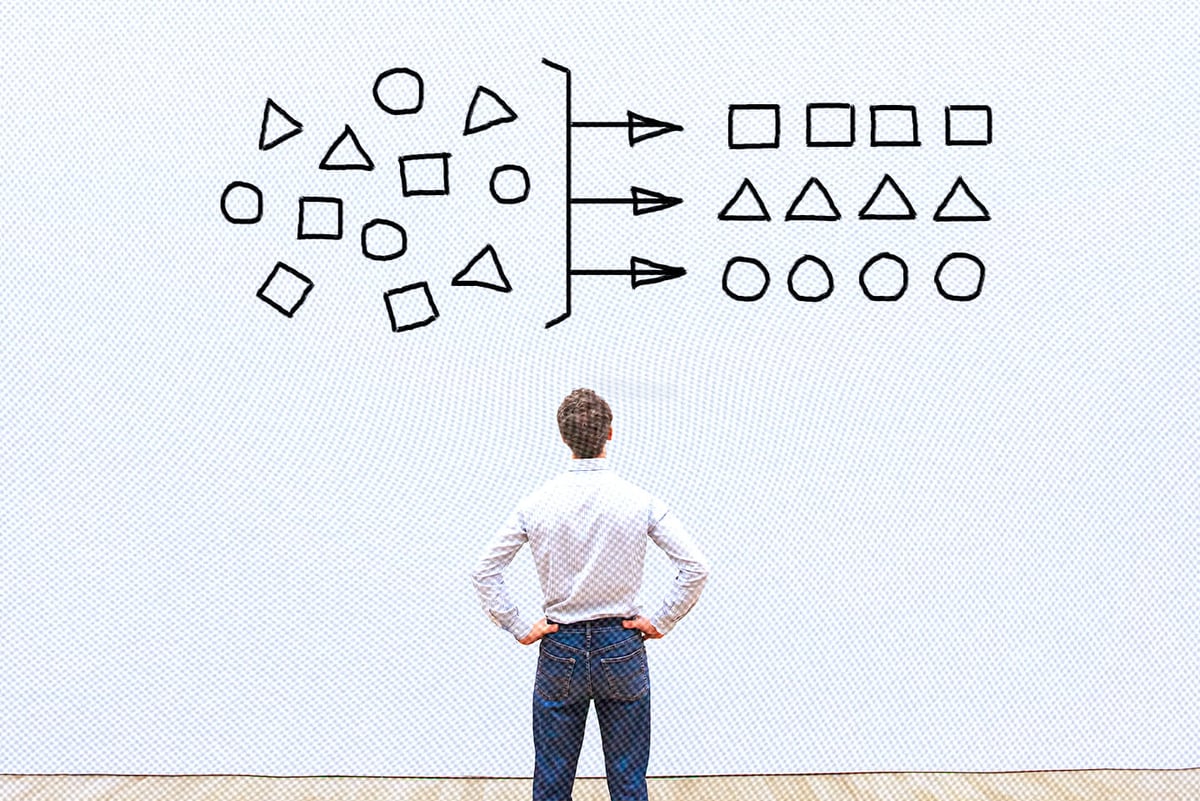
At its core, AI is a classifier. Possibly the best classifier humanity has ever built.
Its intelligence lies in taking an enormous amount of information and sorting it: this pattern belongs here, that signal means this, this sentence most likely continues that way. It then applies probabilistic reasoning to those classifications, weighing what is most likely, most relevant, most fitting, until what it produces comes close to human thought.
The simplest way to understand AI is this:
Computation power + classification + probabilistic algorithms = the answer, or what we call "intelligence."
There is no magic in it. It is mathematics running at a scale and speed no human mind can match. And that is exactly where its value lies.
Why AI Is Being Pushed Forward: Better Decisions
Classification on its own is not the point. The point is what classification enables: better decisions.
When a doctor, a trader, a teacher, a founder or a student can have vast amounts of information sorted, weighed and made sense of in seconds, their decisions improve. That is the real value proposition of AI, and it is why the technology is being carried forward with such force.
This has had a profound side effect. Knowledge work and expertise, which used to sit behind years of training, expensive consultants and gated institutions, is now being democratized. What was once a chore that only trained professionals could perform can now be done, or at least assisted, by anyone with access to these systems. The old model of the job, where you were paid simply to hold and apply specialized knowledge, is being fundamentally unsettled.
The Real Transformation: When Machines Become Intelligent
What we see today, the chatbots, copilots and assistants, is only the first layer.
The deeper shift begins when this classifying intelligence gets integrated into machines themselves. When machines can perceive, classify, predict and act, they become intelligent. That is where the real transformations will start to show: in innovation, in scientific discovery, in manufacturing, in medicine, in how physical work gets done.
The AI in your browser is the prologue. The AI inside machines is the story.
Closed Systems and the Business of Fear
Now look at who is building this technology and how they are talking about it.
On one side are the closed model companies: the big tech firms and labs that build proprietary models and sell access through APIs. Many of these same companies are the loudest voices warning that AI is dangerous. They tell the world it could take jobs, destabilize society, even threaten humanity, while they themselves continue building exactly that technology, faster than anyone else.
The effect is that the market's attention gets hooked on fear. Job loss, displacement, collapse. And while everyone is looking at the fear, these companies are exerting maximum pressure to get businesses to build their systems on closed APIs. The more businesses and people build on top of their infrastructure, the more dependent the world becomes on them.
Fear, in this sense, is not just a warning. It is also a market strategy.
Open Source: The Power of Choice
On the other side is open source.
Open source AI is something a user can self-host on their own compute. You download the model, run it on your own hardware, fine-tune it on your own data and control it fully. No one can switch it off, reprice it overnight or quietly change how it behaves.
This is where people and businesses hold real power. With open source, you get to decide what your dependence looks like. A company can choose to run certain processes on a closed model from a big tech provider, while running other workflows on open source models it has trained and fine-tuned itself. That hybrid approach is not a compromise. It is sovereignty.
Right now, open source is still an expensive affair. Running capable models requires serious hardware, and serious hardware costs serious money. But this will not remain true forever. It is quite possible that new chips will arrive that make offline, internal AI models capable enough to compete with the big closed models released earlier. When that happens, the balance of power shifts.
China has become a major force in this space, publishing open source models that are freely available today. Whether that stays free, or whether usage later gets taxed or restricted, remains an open question. But for now, these models are widely accessible. This is exactly why the DeepSeek moment was so celebrated. It was seen as a direct challenge to the monopoly the closed system companies were building, proof that frontier-level capability did not have to belong to a handful of firms.
The Ground Beneath It All: Compute and Chips
Whether a model is open or closed, it runs on the same thing: compute. And compute comes from chips.
The biggest supplier of AI chips in the world is Nvidia. Nvidia designs the chips on which both open source and closed source models run. Whichever side of the open-versus-closed debate you stand on, you are very likely standing on Nvidia's hardware.
Others are in the race too. AMD builds competing AI accelerators. Google designs its own TPUs, Amazon builds Trainium chips for its cloud, Huawei develops its Ascend chips for the Chinese market, and specialized players like Cerebras and Groq are building hardware designed specifically for running AI. Most of the world's advanced chips, regardless of who designs them, are manufactured by TSMC.
Whoever controls compute controls how far and how fast intelligence can spread. That is why chips have become as strategic as oil once was.
Capital Wants Dependence
Follow the capital and the picture becomes clearer.
The owners of capital want more and more people and systems to adhere to their platforms. Their goal is to infuse AI into everything, every product, every process, every workflow, so that businesses and people become dependent on AI, and specifically on their AI.
This is not unique to AI. It is how capitalism has always behaved with new infrastructure. But the scale here is unprecedented, because AI does not just sit beside our work. It enters into how we think, decide and produce.
Open source is the counterweight. It gives individuals and companies the ability to choose where they depend and where they stay independent.
The Economy Is Becoming Mathematical
Zoom out further and you see the economy itself changing shape.
The old economy was rigid and relatively predictable. Supply chains, trade flows and market behavior could be understood and forecast if enough information was gathered together. It moved slowly, and its movements could be read.
We are now entering a dynamic economy. It is becoming more mathematical, driven by data, algorithms and constant recalculation. Transformations are happening continuously rather than occasionally.
Technology is also exerting far more power over our daily lives than it did even a few years ago. Money used to be cash and digital. Now more and more people are moving fully digital, adopting new payment systems at a remarkable pace. On top of that comes programmable money: tokenization, cryptocurrency and digital assets becoming more relevant to the market. Money is no longer just a store of value. It is becoming code.
Digitalization is getting rooted deeper into everyday life, and everything is rolling forward together: intelligent machines, programmable money, algorithmic markets.
The Chaos Phase
Here is the honest truth: we are in the middle of the chaos.
For roughly the next three years, until the market stabilizes, expect a great deal of uncertainty. Chaos creates fear, confusion, delusion and demotivation. There will be talk of job market crashes and economic crashes. Some of it will happen.
This is what transformation looks like from the inside. Much of what existed before gets destroyed, and new things start forming through new systems that carry more intelligence. The old structures break down before the new ones stand up. It is uncomfortable, but it is not the end. It is the transition.
And it is precisely during this chaos that closed-system companies are pressing hardest, because a frightened market is a market that rushes to lock itself into whatever looks safe.
Jobs Are Not Going Away. The Bar Is Going Up.
Jobs are not going to disappear. There will still be a need for people.
What is changing is the level of competence required. The expectations are now above what the previous era demanded. The person who thrives in this new world will:
- Understand the architecture of systems and of companies, not just their own small task within them
- Be self-sufficient and self-reliant
- Get work done quickly and efficiently by using AI technologies intelligently
- Continuously improve how they work, systematically
Integrating AI into daily life is inevitable. Resisting it is not a strategy. But being swept along by it without any clarity is not a strategy either.
The Golden Rule
Here is the rule worth living by as we navigate this transformation:
Know clearly: this is who I am. This is what I do. This is the role AI plays in my work. This is how efficiently I use it. This is what I output that is considered valuable. And this is how I drive myself to stay competent, through systematic practice that I keep improving.
If you can answer each of these with clarity, you will not be displaced by AI. You will be amplified by it.
Guard Your Mind
One final truth, perhaps the most important: no one has power over you unless you allow it.
If someone, somewhere, declares that jobs are doomed, and you let that idea enter your thinking and settle there as a philosophy, it starts to concretize. What we think becomes our reality over time. A belief repeated long enough becomes a behavior, and a behavior repeated long enough becomes a life.
So avoid the doomers and the negative sayers. Avoid the constant stream of negative news. Instead:
- Work on yourself and build yourself
- Understand how AI actually works behind the scenes
- Learn to create workflows and systems that improve your productivity
- Use this technology to raise the quality and value of what you produce
You do not have to be anti-AI. Treat it for what it is: a tool, an extraordinarily efficient one, that can elevate your value.
The world is being reclassified. Machines are becoming intelligent. Money is becoming programmable. The economy is becoming mathematical. In the middle of all this chaos, the people who stay clear about who they are, and deliberate about how they use these tools, will be the ones who shape what comes next.