What Is So Unique About Aynstyn?
Aynstyn is not simply delivering knowledge; it is developing the individual's capacity to learn, think, and perform critically.
By Aynstyn · · 5 min read
What is so unique about Aynstyn? At the heart of Aynstyn is a fundamentally different way of thinking about learning and human development. We are building intelligent, self-reinforcing feedback loops that empower and propel an individual forward. The system is designed so that every interaction creates momentum: the user does something, immediately sees the value of what they have done, understands where they can improve, and is naturally compelled to take the next step.
Learning therefore does not become a passive activity of consuming content; it becomes an active, continuously improving process in which the system itself creates the motivation to keep going. The more a person engages with Aynstyn, the more useful the system becomes to them, and the more clearly they begin to see their own progress.
What makes this particularly powerful is that critical thinking is built into the learning process itself. Aynstyn is not simply trying to help an individual acquire more knowledge; it is trying to make the individual more aware of how they understand. Through assessment, questioning, reflection, practice, and application, a person begins to recognise how they observe a problem, how they interpret information, where their reasoning becomes weak, and how effectively they are able to absorb and apply knowledge. Instead of moving endlessly from one piece of content to another, the learner is continuously brought back to the areas where their understanding needs attention.
The system identifies the weak areas, works towards understanding the root cause behind those weaknesses, and then creates a focused path for improvement. In this sense, Aynstyn is not simply delivering knowledge; it is developing the individual's capacity to learn, think, and perform critically.
This is where our intelligent learning system becomes particularly important. We believe that a weakness is rarely just a weakness on the surface. There is usually a root cause beneath it. A person may perform poorly in a particular subject not because they lack information, but because they have misunderstood a foundational concept, struggle to connect ideas, lack the ability to apply what they know, or have developed an ineffective way of approaching problems. Aynstyn is designed to uncover these underlying causes and then build a framework around them.
Through our MAPPT framework, learning becomes structured around the different dimensions required to move from understanding to competence. It is supported by a broader belief that achievement comes from the combination of preparation and attitude that when the right preparation meets the right mindset, an individual can unlock a much higher level of performance.
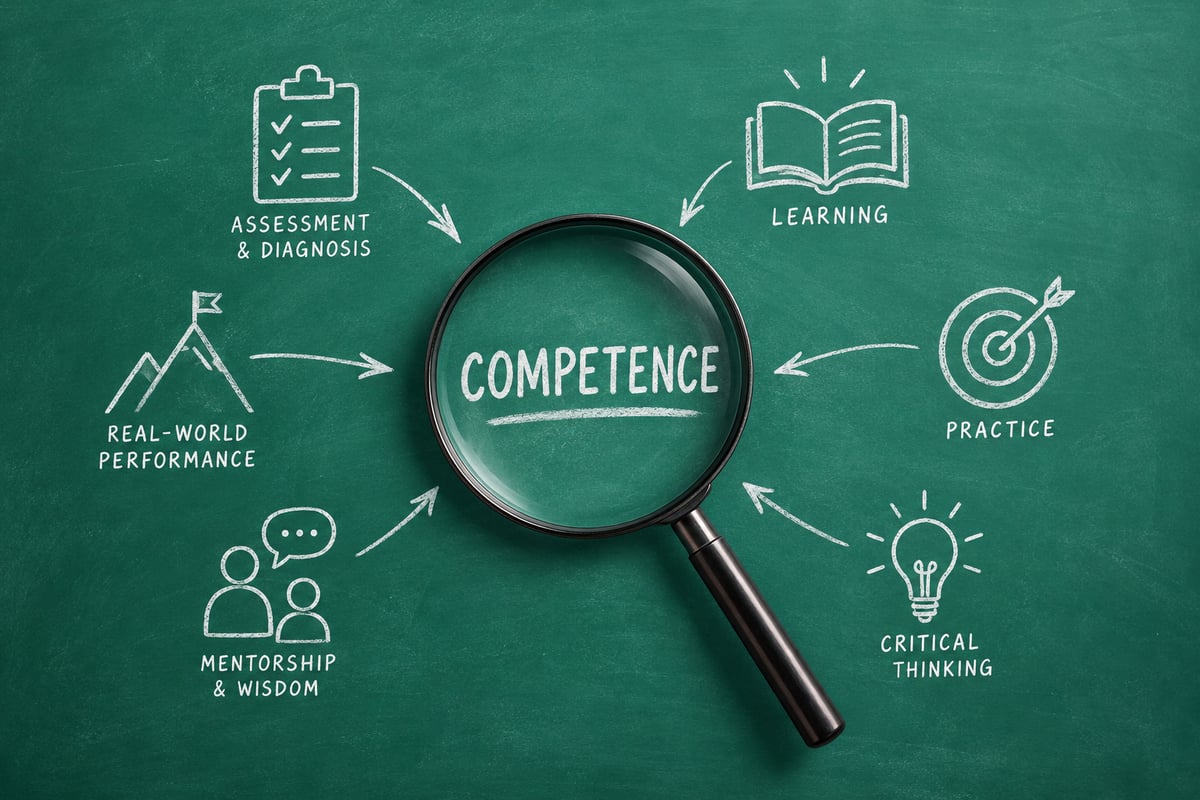
This is ultimately what makes our proposition different. We are not simply promising learning; we are promising competence. We want to understand competence more deeply than anyone else and build a system that can actually help an individual develop it. Competence is not the same as knowing an answer. It is the ability to understand, reason, apply, perform, adapt, and demonstrate what you know when it matters.
That distinction sits at the centre of Aynstyn. Every part of the system from assessment and diagnosis to practice, reflection, mentoring, and interviews is designed around moving a person closer to genuine competence. Our value, therefore, does not come from how much content we can put in front of someone. It comes from how effectively we can understand where they are, identify what is holding them back, and help them move forward.
This philosophy has also led us to something much bigger with the launch of Mentor Space. We believe some of the most valuable knowledge in the world already exists inside people who have spent years doing, building, solving, leading, and learning. Yet much of that knowledge remains locked inside individual experience. A person may have developed an exceptional way of approaching a problem, built a successful career, mastered a craft, or learned through years of trial and error, but there has historically been no smooth mechanism for transferring that accumulated wisdom to someone else.
Mentor Space is our attempt to change that. We are creating a marketplace where people can discover mentors, explore their playbooks, engage with the way they think and work, and choose the form of knowledge transition that is most useful to them.
We see this as potentially one of the smoothest forms of knowledge transition ever created. A mentor does not have to teach in only one traditional format. They can decide how they want to transfer their knowledge through a playbook, a structured course of action, assessments, practice sessions, AI interactions, interviews, mentoring conversations, reflection, or a combination of these experiences. The learner, meanwhile, is not simply buying information. They are gaining access to someone's accumulated experience and a practical path for applying it. The creator or mentor is rewarded monetarily for making that knowledge available, while the learner gains a much shorter path between wanting to know something and actually knowing how to do it.
This creates an important connection between the two sides of Aynstyn. On one side, we have the intelligence system that understands the learner: what they know, where they struggle, how they think, and what they need to work on. On the other, we have people who possess valuable knowledge, experience, and wisdom and are willing to share it. Between the two sits the knowledge-transition layer—the ability to take what one person knows and translate it into an experience that another person can understand, practise, apply, and ultimately internalise. This is where assessments, AI practice sessions, AI interviews, mentoring sessions, reflection, and other experiences become parts of one larger system rather than isolated features.
We are still at the beginning of this journey. Right now, we are in a phase of intense building, experimentation, and momentum. We are ourselves living the same principle that we want Aynstyn to deliver to its users: observe, understand, identify the gaps, act on them, learn from the feedback, and keep moving forward. Every product we build and every experience we create is part of our attempt to construct a system that genuinely propels people rather than simply gives them more things to consume.
Ultimately, Aynstyn is being built around a simple but ambitious belief: people do not need more information as much as they need a better system for turning information, experience, and wisdom into competence. If we can continuously understand an individual, identify what is missing, connect them with the right knowledge and people, give them opportunities to practise and reflect, and show them the progress they are making, then learning becomes self-reinforcing. The individual gains awareness, awareness creates action, action creates competence, and competence creates the confidence and momentum to take on the next challenge.
That is the system we are building at Aynstyn. Analyze. Realize. Transform.